The transformation of ordinary photographs into stunning visual masterpieces relies heavily on the art and science of pic retouching. This specialized discipline combines technical expertise with artistic vision to enhance images while maintaining authenticity and natural appearance. Whether you're a professional photographer, ecommerce business owner, or creative professional, understanding the nuances of pic retouching enables you to deliver compelling visual content that resonates with your audience and drives engagement.
Understanding the Fundamentals of Pic Retouching
Pic retouching encompasses a comprehensive range of image enhancement techniques designed to correct flaws, improve composition, and optimize visual appeal. The process goes far beyond simple filters or one-click adjustments, requiring skilled manipulation of various image elements to achieve professional results.
At its core, photo retouching involves cloning, healing, and erasing tools that enable editors to address specific image issues systematically. These fundamental techniques form the foundation for more advanced retouching work across all photography genres.
Key Components of Professional Retouching
Professional pic retouching addresses multiple image aspects simultaneously:
- Skin retouching: Smoothing texture while preserving natural pores and details
- Color correction: Balancing white balance, saturation, and tonal values
- Blemish removal: Eliminating temporary imperfections without altering permanent features
- Exposure adjustment: Correcting lighting inconsistencies and shadow details
- Sharpening: Enhancing edge definition and overall image clarity
- Background refinement: Cleaning up distracting elements or replacing backgrounds entirely
The complexity of pic retouching varies significantly based on the intended use and industry standards. Fashion photography typically requires extensive retouching, while documentary photography prioritizes minimal intervention to maintain authenticity.
Essential Tools and Software for Pic Retouching
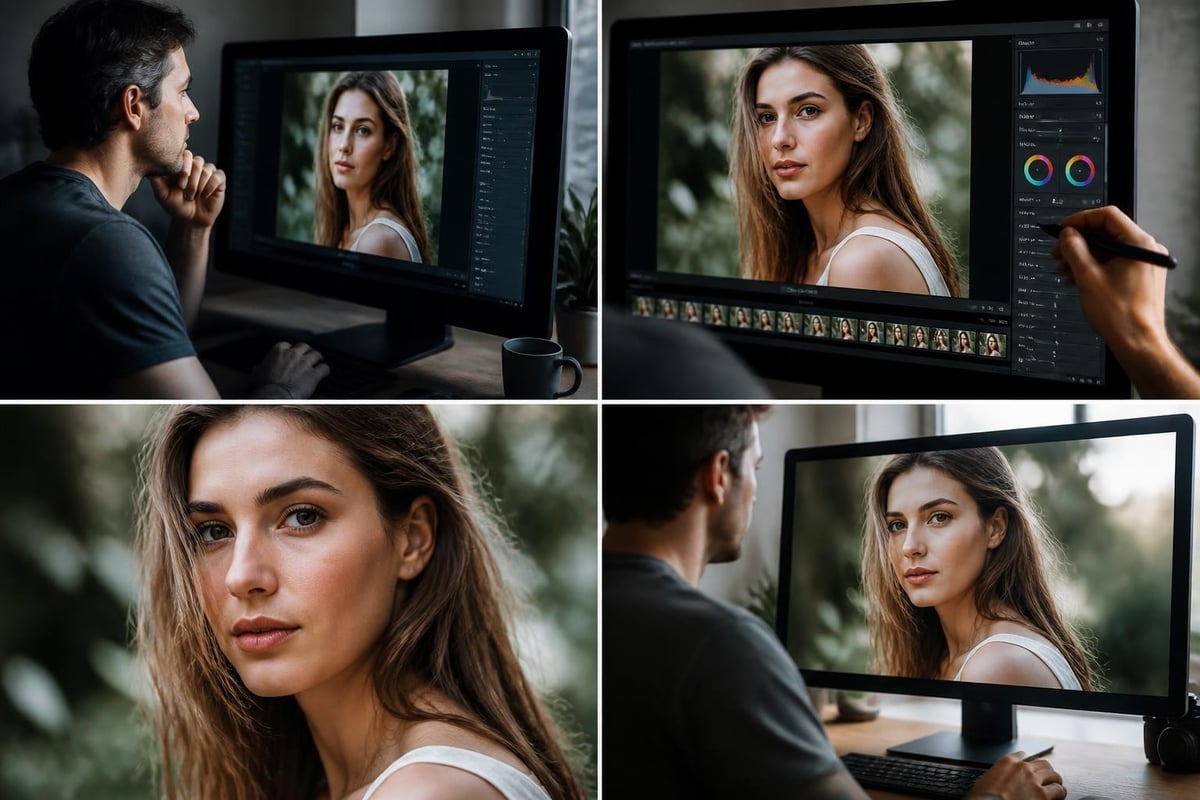
Selecting appropriate software directly impacts retouching efficiency and final output quality. Industry professionals rely on several established platforms, each offering unique advantages for specific retouching tasks.
Adobe Photoshop remains the industry standard for comprehensive pic retouching work. Its extensive toolkit includes healing brushes, clone stamps, adjustment layers, and advanced selection tools that provide granular control over every image element. The software's non-destructive editing capabilities through layers and masks enable editors to make adjustments without permanently altering original image data.
Alternative platforms have emerged to address specific niches and workflow preferences. Capture One excels in color grading and tethered shooting scenarios, while Affinity Photo provides cost-effective capabilities comparable to Photoshop for independent professionals and small businesses.
Comparing Top Retouching Software Options
| Software | Best For | Key Strengths | Price Point |
|---|---|---|---|
| Adobe Photoshop | Comprehensive retouching | Extensive tools, industry standard | $20.99/month |
| Capture One | Color grading, studio work | Superior color handling, tethering | $24/month |
| Affinity Photo | Budget-conscious professionals | One-time purchase, robust features | $69.99 one-time |
| GIMP | Beginners, basic retouching | Free, open-source | Free |
Understanding which software aligns with your specific requirements helps optimize both investment and learning curve. Many professionals combine multiple platforms to leverage each program's strengths.
Advanced Pic Retouching Techniques
Professional retouchers employ sophisticated methodologies that separate exceptional work from basic adjustments. These techniques require practice and understanding of image structure at a technical level.
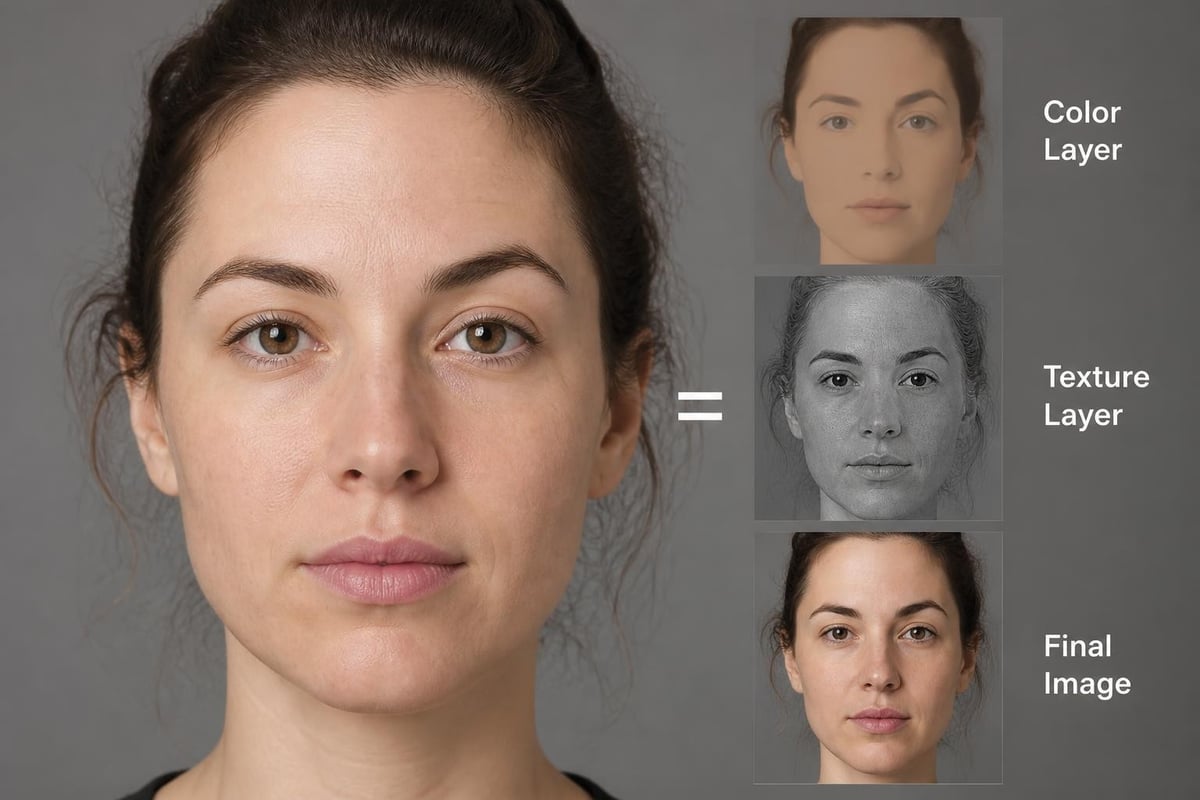
Frequency separation stands as one of the most powerful advanced techniques in modern pic retouching. This method separates image texture from color and tone, allowing editors to address each element independently. The technique proves invaluable for skin retouching, enabling smoothing of tone while preserving natural skin texture that maintains realistic appearance.
Implementing Frequency Separation
- Duplicate the base layer twice, naming them "low frequency" and "high frequency"
- Apply Gaussian blur to the low-frequency layer to remove texture detail
- Apply High Pass filter to the high-frequency layer to isolate texture
- Change high-frequency layer blend mode to Linear Light
- Retouch color and tone on low-frequency layer
- Address texture issues on high-frequency layer
Dodge and burn techniques provide dimensional enhancement by selectively lightening and darkening specific image areas. This traditional darkroom technique translates effectively to digital pic retouching, adding depth and directing viewer attention through careful light manipulation.
Professionals also utilize color grading to establish mood and visual consistency across image collections. This process involves adjusting individual color channels, applying complementary color theory, and creating cohesive visual narratives through intentional color choices.
Industry-Specific Pic Retouching Applications
Different photography sectors require tailored retouching approaches that align with industry expectations and practical requirements. Understanding these variations ensures appropriate technique selection and optimal results.
Portrait and Fashion Photography
Portrait retouching demands careful balance between enhancement and authenticity. Skin smoothing, eye brightening, and subtle reshaping constitute standard practices, but the ethics of body reshaping remain important considerations that responsible retouchers must address thoughtfully.
Fashion photography typically allows more extensive manipulation, including body contouring, dramatic color grading, and composite work. However, increasing consumer demand for authenticity has prompted many brands to adopt more restrained retouching standards that celebrate natural beauty.
Product and Ecommerce Photography
Product photography requires precise pic retouching that accurately represents merchandise while maximizing visual appeal. Consistency across product lines becomes critical for professional ecommerce presentation. Professional ecommerce photo editing services address specific requirements including background removal, color correction, symmetrical alignment, and blemish removal to create compelling product presentations that drive conversions.
For ecommerce businesses, retouching priorities include:
- Accurate color representation: Ensuring product colors match physical items
- Clean backgrounds: Providing distraction-free presentation on white or transparent backgrounds
- Detail enhancement: Highlighting product features and textures
- Consistency: Maintaining uniform lighting and styling across product catalogs
- Shadow creation: Adding realistic shadows for dimensional appearance
Online retailers benefit significantly from standardized retouching workflows that ensure every product image meets quality benchmarks and brand guidelines.
Selecting Appropriate Retouching Techniques
Choosing the right photo retouching technique depends on multiple factors including image purpose, target audience, industry standards, and available resources. A systematic evaluation process helps determine optimal approaches for each project.
Project assessment begins with identifying the primary image purpose. Marketing materials require different treatment than editorial content, while social media distribution demands considerations beyond print publication needs.
Client expectations significantly influence retouching decisions. Some clients prefer minimal intervention that preserves natural appearance, while others expect heavily stylized results aligned with specific aesthetic visions. Clear communication during project initiation prevents misunderstandings and ensures deliverables match expectations.
Decision Matrix for Technique Selection
| Image Type | Primary Goal | Recommended Approach | Typical Scope |
|---|---|---|---|
| Portrait | Natural enhancement | Light skin smoothing, color correction | Subtle intervention |
| Fashion | Stylized presentation | Extensive retouching, creative grading | Heavy intervention |
| Product | Accurate representation | Background removal, color accuracy | Technical precision |
| Real estate | Property appeal | Perspective correction, lighting enhancement | Moderate enhancement |
Budget and timeline constraints also impact technique selection. High-end photo retouching techniques like frequency separation and advanced compositing require significant time investment, making them cost-prohibitive for high-volume projects with limited budgets.
Achieving Natural-Looking Results
The hallmark of exceptional pic retouching lies in invisible enhancement that improves images without obvious manipulation. Viewers should perceive polished, professional photographs rather than heavily edited compositions.
Subtlety remains the most critical principle for natural retouching. Excessive smoothing creates plastic-looking skin, while overzealous color correction produces unrealistic tones that undermine image credibility. Professional retouchers develop restraint through experience, knowing when additional adjustments improve versus compromise results.
Maintaining proper image structure preserves authenticity. This means respecting natural skin texture, preserving appropriate detail levels, and avoiding distortions that alter proportions unnaturally. Photo retouching tips that prioritize natural appearance emphasize working with existing image qualities rather than fighting against them.
Best Practices for Natural Enhancement
- Work at appropriate zoom levels, alternating between detail view and full image assessment
- Use adjustment layers for non-destructive editing and easy modification
- Build retouching gradually through multiple subtle adjustments rather than extreme single edits
- Preserve natural texture by avoiding excessive blur or smoothing
- Maintain realistic lighting and shadow relationships
- Reference original images frequently to prevent over-processing
Many professionals utilize before-and-after comparisons throughout the retouching process, toggling visibility to ensure enhancements remain proportionate and appropriate. This practice prevents gradual drift toward excessive manipulation that occurs when editors lose perspective during extended editing sessions.
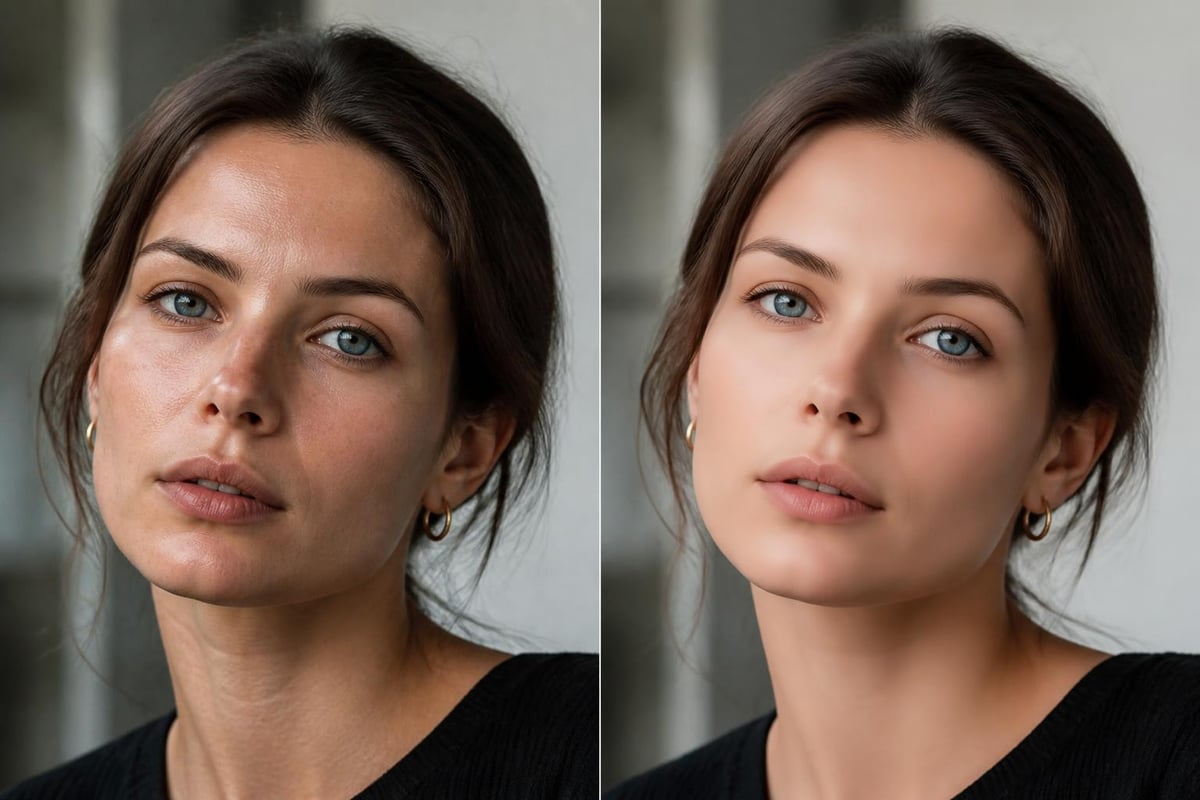
Ethical Considerations in Pic Retouching
The power to alter images carries significant ethical responsibilities, particularly when retouching affects how people perceive themselves and others. Understanding the ethical implications of pic retouching practices helps professionals navigate these complex considerations thoughtfully.
Body image concerns have intensified as heavily retouched images proliferate across media platforms. Unrealistic beauty standards perpetuated through excessive retouching contribute to negative self-perception, particularly among younger audiences exposed to manipulated images without context or media literacy.
Transparency represents one approach to addressing ethical concerns. Some publications now label retouched images or commit to minimal intervention policies that preserve authentic representation. These practices acknowledge retouching's role while limiting potential harm from unrealistic portrayals.
Professional associations and industry groups have established guidelines encouraging responsible retouching practices. These standards typically recommend preserving individual characteristics, avoiding extreme body reshaping, and maintaining honest representation that doesn't mislead viewers about product appearance or human features.
Building Efficient Retouching Workflows
Workflow optimization dramatically impacts productivity and consistency in pic retouching operations. Systematic approaches ensure quality while minimizing time investment per image.
Action recording in Photoshop allows automation of repetitive tasks. Editors can record multi-step processes like basic color correction or resizing sequences, then apply them to entire image batches with single-click execution. This automation proves invaluable for high-volume projects requiring consistent baseline adjustments.
Organizing projects through logical folder structures and naming conventions prevents confusion and facilitates file retrieval. Professional retouchers typically separate raw files, working files with layers, and final exports into dedicated directories with clear identification systems.
Streamlined Workflow Components
- Batch import and initial sorting: Organize images by category, priority, or client
- Baseline corrections: Apply consistent adjustments for exposure, white balance, and cropping
- Detailed retouching: Address individual image requirements systematically
- Quality control review: Check all images against standards before delivery
- Export and delivery: Generate appropriate file formats and resolutions for intended use
Professional photo editing services often develop proprietary workflows refined through thousands of projects, ensuring consistency and efficiency that individual practitioners may struggle to achieve independently. These established systems prove particularly valuable for businesses requiring regular, high-volume retouching support.
Tools and Resources for Continuous Improvement
Pic retouching skills develop through continuous learning and practice. The field evolves rapidly as new techniques emerge and software capabilities expand, requiring ongoing education to maintain competitive capabilities.
Online tutorials and courses provide structured learning paths for both beginners and advanced practitioners. Platforms like YouTube host extensive free content, while paid courses through photography education sites offer comprehensive instruction with structured curricula and professional feedback.
Community engagement through forums and social media groups enables knowledge sharing and problem-solving support. Retouchers frequently encounter unique challenges that benefit from collective expertise, and participating in professional communities accelerates skill development through exposure to diverse approaches and techniques.
Professional retouchers also invest in continuous experimentation, dedicating time to testing new tools, exploring alternative techniques, and pushing creative boundaries beyond client work requirements. This experimental practice builds versatility and creative problem-solving abilities that distinguish exceptional retouchers from competent technicians.
Recommended Learning Resources
- Adobe's official tutorials and documentation for software-specific instruction
- Professional photography forums for technique discussion and troubleshooting
- Industry conferences and workshops for hands-on learning and networking
- Specialized retouching courses focusing on advanced techniques and workflows
- Online portfolios and case studies demonstrating professional standards and approaches
Staying current with industry trends in photo editing helps professionals anticipate client needs and adapt services to evolving market demands. Following leading retouchers and studios provides inspiration and insight into cutting-edge techniques and creative applications.
Quality Control and Client Communication
Delivering exceptional pic retouching services requires robust quality control processes and clear client communication throughout project lifecycles. These practices ensure satisfaction and build long-term professional relationships.
Establishing clear specifications before beginning work prevents misunderstandings and reduces revision requirements. Detailed creative briefs should address style preferences, technical requirements, delivery formats, and revision policies to align expectations from project inception.
Quality control checkpoints throughout the retouching process catch errors early when corrections require minimal time investment. Multi-stage review ensures consistency, accuracy, and adherence to specifications before final delivery.
Professional retouchers document their processes through notes, version tracking, and organized file management that facilitates efficient revisions if needed. This documentation proves invaluable when clients request modifications or when similar future projects benefit from established approaches.
Managing High-Volume Retouching Projects
Scaling pic retouching operations for high-volume requirements demands different strategies than individual image work. Businesses processing hundreds or thousands of images monthly require systematic approaches that maintain quality while managing costs and timelines.
Standardization becomes critical for volume work. Establishing templates, presets, and documented procedures ensures consistency across large image sets regardless of which team member handles individual files. Style guides with visual examples provide clear reference standards that minimize subjective interpretation.
Many businesses discover that outsourcing to professional editing providers offers advantages over maintaining in-house retouching teams. Specialized providers bring established workflows, trained staff, and scalable capacity that adapts to fluctuating project volumes without fixed overhead costs.
Technology integration through automated quality checking, batch processing capabilities, and project management systems streamlines high-volume workflows. Cloud-based collaboration platforms enable distributed teams to work efficiently across geographic boundaries while maintaining communication and file access.
Future Trends in Pic Retouching
The pic retouching landscape continues evolving through technological advancement and changing cultural attitudes toward image manipulation. Understanding emerging trends helps professionals prepare for industry shifts and client expectation changes.
Artificial intelligence increasingly augments traditional retouching workflows. AI-powered tools now handle routine tasks like background removal, basic skin smoothing, and color correction with impressive accuracy and speed. While these tools enhance efficiency, they complement rather than replace skilled human retouchers who provide creative judgment and nuanced decision-making that algorithms cannot replicate.
Growing emphasis on authenticity influences retouching standards across industries. Consumers increasingly value realistic representation, prompting brands to adopt more restrained retouching approaches that celebrate natural appearance while maintaining professional polish. This shift requires retouchers to develop expertise in subtle enhancement techniques that improve without obviousness.
Mobile editing capabilities continue expanding, with sophisticated retouching tools now available on smartphones and tablets. While professional desktop applications remain superior for complex work, mobile solutions enable quick edits and on-location adjustments that enhance workflow flexibility.
The integration of AI with human expertise represents perhaps the most significant evolution in professional retouching services. This hybrid approach leverages automation for routine tasks while preserving human creativity and quality control for nuanced decision-making that separates adequate results from exceptional work.
Mastering pic retouching requires balancing technical proficiency with artistic vision, ethical awareness, and practical business considerations. Whether you're developing in-house capabilities or seeking professional support, understanding these principles ensures your visual content meets the highest standards of quality and authenticity. Photo Editing Company provides comprehensive retouching services tailored to your specific requirements, combining advanced technology with skilled human expertise to deliver exceptional results that enhance your brand and engage your audience effectively.