
Starting Your Newborn Photography Business

Tiny toes, sleepy smiles, and the quiet magic of a fresh start—newborn photography is unlike any other field. It focuses on those fleeting moments that parents want to hold onto forever. While many start just snapping photos of friends' babies for fun, there comes a point where you realize this could be a real career. Turning that creative spark into a legitimate business is an exciting step, but it requires more than just a good camera and a soft blanket.
The following steps provide a roadmap for those first few moves in newborn photography. We will look at how to set up your space, keep your tiny subjects safe, and communicate with new parents. If you are ready to grow your passion into a sustainable trade, let’s look at how to build a solid foundation for your newborn studio.
Setting Up Your Newborn Photography Studio
Creating a professional environment is about more than just aesthetics; it is about providing a safe and cozy atmosphere for your smallest clients. Here is how to set the stage for a successful newborn photography session:
- Maintaining a Safe Environment for Infant Portraits
- Maintain a room temperature of around 24-26°C.
- Use a white noise machine to help the infant stay asleep.
- Keep all heavy gear secured or tucked away to avoid accidents.
- Selecting Soft Fabrics and Props for Baby Photography
- Stick to textures like organic cotton or faux fur that feel gentle on skin.
- Pick a palette of creams, tans, and greys to keep the focus on the baby.
- Wash every wrap and blanket in scent-free detergent before each use.
- Safety and Handling in Newborn Photography
- Position your subject near a large window to use soft, indirect sunlight.
- Use a simple white reflector to fill in any dark shadows on the face.
- Avoid using a flash, as it can startle a sleeping newborn and disrupt the mood
Safety and Handling in Newborn Photography
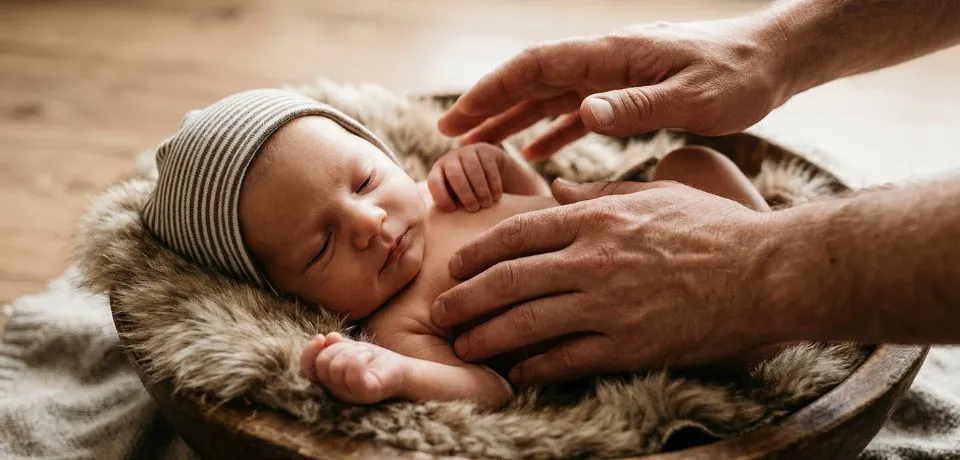
Nothing matters more in newborn photography than the well-being of the little one in front of your lens. Keeping the baby secure and relaxed is the true hallmark of a professional. For more in-depth safety guidelines, the Accredited Professional Newborn Photographers International (APNPI) provides excellent resources on infant safety.
Putting Comfort First
Prioritizing the infant’s comfort at all times ensures a peaceful session. Watch for cues like tension in the hands or rooting, which might mean the baby needs a break. A cozy, fed baby is much easier to pose, so never rush the process. If a certain position seems to cause any fussing, move on to a simpler one immediately.
Sanitation Standards for Props and Hands
Cleanliness is non-negotiable when working with newborns. Since their immune systems are still developing, you must follow strict sanitation standards for props and hands:
-
- Hand Washing: Scrub your hands thoroughly before you touch the baby.
- Prop Care: Every wrap, rug, and basket needs a deep clean after each use.
- Surface Safety: Wipe down any hard surfaces or posing tables with baby-safe cleaners.
The Role of Spotters and Composite Shots
Some of those popular poses you see online are actually illusions made for safety. Identifying the importance of spotters and composite shots is a game-changer:
- Always Use a Spotter: A parent or assistant should keep their hands just inches away from the baby at all times.
- Edit for Safety: For poses where a baby “holds” their head up, take one photo supporting the wrists and another supporting the head.
- Merge the Layers: Use your editing software to join these two frames, removing the hands while keeping the baby supported the whole time.
Communication Strategies for Newborn Photography Clients
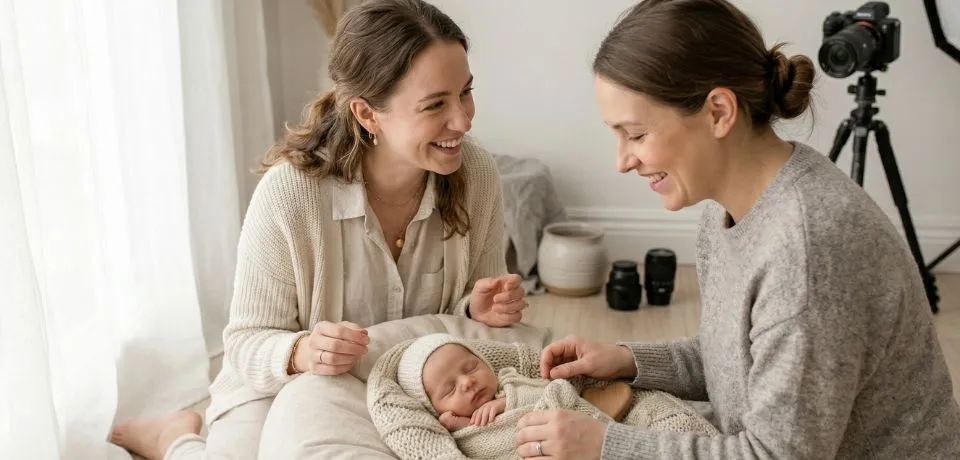
Building a strong bond with the family is just as important as the photos themselves. When parents feel at ease, the entire session flows better.
Managing Expectations Early
A successful shoot begins long before the baby arrives. Send a simple prep guide a few days early so they know what to bring. Explain that these sessions take time, often three to four hours, to allow for feedings and diaper changes. When they know what to expect, they are much less likely to feel anxious if the baby stays awake or needs extra soothing.
Pro Tip: Invite parents to sit nearby with a cool drink and snacks. Playing soft background music helps mask any shutter clicks and keeps the atmosphere peaceful.
Keeping Parents Involved
- Hands-on Help: Ask a parent to help with a wrap or to pat the baby to sleep gently.
- The "Sneak Peek": During the shoot, show them a few raw shots on the back of the camera to build their confidence.
- Comfort First: Remind them that a fussy baby is normal and you are in no rush.
Strategies for a Smooth Workflow
To keep everything moving, use a clear plan for your communication. Start with an initial chat to discuss favorite colors and any specific shots they hope to see. Once the session ends, send a quick note to let them know how well it went and when they can expect their gallery. This level of professionalism keeps the family coming back for future milestones.
Posing and Composition Techniques
Learning how to pose a sleeping infant takes patience and a gentle touch. As you build your newborn photography skills, focus on these reliable methods:
1. Standard Poses for Beginners to Practice
Start with the "Side-Lying" pose. This involves tucking the baby’s hands under their chin while they lie on their side. Another great option is the "Tushie-Up" pose, where the baby lies on their tummy with their knees tucked under their bottom. These are natural positions that usually keep the infant calm and asleep while allowing you to show off those tiny features.
2. Using Angles to Create a Peaceful Aesthetic
The way you hold your camera changes the entire mood of the photo. Aim to shoot from slightly above the baby’s head, looking down toward the nose. This creates a soft, flattering look. Avoid shooting "up the nose," as it often looks awkward and less professional. Soft side lighting helps define the small details of the face without being too harsh.
3. Varying Shots Without Moving the Baby Frequently
Keeping the baby asleep is your biggest goal, so you should limit how much you touch them. Instead of changing the pose, change your own position:
- Wide Shot: Show the full baby and the props for a sense of scale.
- Close-up: Move in to get the eyelashes and lips.
- The Details: Focus purely on the tiny toes or a small hand holding a blanket.
- Angle Shift: Walk around the beanbag to see how the light hits from a different side.
Post-Processing Your Newborn Photography Gallery

Once the session is over, the work shifts to your computer. High-quality editing helps you maintain a professional look that parents will love.
1. Standardizing Your Editing Workflow
Efficiency is the key to a profitable business. Instead of starting from zero with every photo, create a repeatable process.
- Batch Editing: Apply basic adjustments to a group of photos to keep the colors uniform.
- Consistency: Ensure white balance is consistent across the entire gallery so skin looks natural in every shot.
- Organization: Use a clear filing system to track which images are ready for the client.
Pro Tip: As your business grows, editing can become the most time-consuming part of your week. Many professional photographers outsource their basic culling and color correction to a dedicated newborn photo editing and retouching team so they can focus on booking more clients and spending time behind the lens.
2. Addressing Skin Tones and Minor Blemishes
Newborn skin can often be tricky, appearing red, flaky, or slightly yellow. Your goal is to make the baby look their best while keeping the results realistic.
- Redness: Soften red patches using selective color tools.
- Flakiness: Gently remove temporary spots or dry skin with a healing brush.
- Softness: Smooth out the background textures to make the subject pop.
3. Maintaining a Timeless Final Appearance
Avoid heavy filters that might look dated in a few years. Aim for a clean, soft look that highlights the infant's natural beauty. By keeping your edits subtle, you ensure the photos remain cherished family heirlooms for decades to come.
Conclusion
Embracing the learning curve of newborn photography is part of every photographer's story. It takes time to get the lighting just right or to feel confident handling a fussy infant. Every session you finish helps you build a portfolio that attracts clients who love your specific style.
The road ahead is full of small milestones and big rewards. By staying focused on safety and quality, you provide families with memories they will cherish for a lifetime. Keep learning, stay creative, and enjoy every step of this rewarding path.
Call to Action (CTA)
Ready to take your skills to the next level? Join our community for more tips and tricks on running a successful studio.
- Sign up for our newsletter: Get the latest guides delivered straight to your inbox.
- Share your story: Have you finished your first newborn shoot? Tell us how it went in the comments below!