

Tips for your newborn photography are essential because this is a delicate art form that balances technical skill with extreme patience and safety. Because capturing those first few days requires a specific environment and a gentle touch, you must prepare thoroughly. Consequently, having a solid plan will help you manage the unique challenges of working with infants.
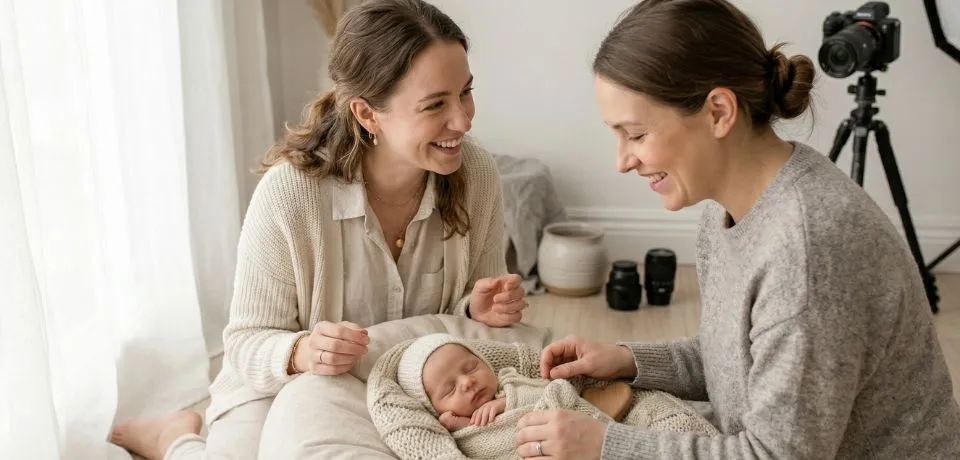
Get Great Results with These 10 Simple Tips for Your Newborn Photography
1. Safety is Non-Negotiable
First and foremost, the baby’s safety is the absolute priority. For this reason, never leave a newborn unattended on a prop or posing surface. Furthermore, many "floating" or upright poses seen online are composites meaning they are two or more images stitched together in post-processing while a hand was supporting the baby the entire time.
2. Timing Your Tips for Your Newborn Photography
In addition to safety, timing is everything. The "sweet spot" for sleepy, curly photos is usually between 5 and 14 days old. During this window, babies sleep more deeply; therefore, they naturally retain their fetal position, making the process much easier for everyone involved.3. Crank Up the Heat
Another important factor is the temperature, as newborns lose body heat quickly. This is especially true when they are being changed into different outfits or wraps. To prevent this, keep the shooting area warm, ideally around 24°C to 27°C. After all, a warm baby is a happy, sleepy baby.
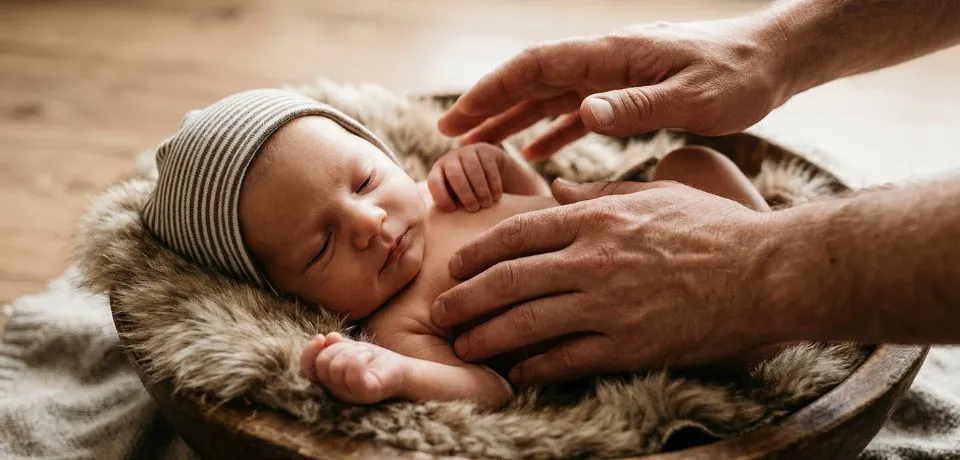
4. Use White Noise and Tips for Your Newborn Photography
Moreover, a silent room can be startling for a baby. Considering this, use a white noise machine or a "shusher" app to mimic the sounds of the womb. Not only does this help drown out the click of the shutter, but it also keeps the infant in a deep sleep throughout the session.5. Use Soft, Directional Light
When it comes to light, you should avoid harsh direct sunlight or direct flash. Instead, consider these options:
- Natural Light: Position the baby near a large window so that the light flows from the top of the baby’s head down the body.
- Artificial Light: Alternatively, use a large softbox or an umbrella with diffusion to create a soft, gentle glow.
6. Feed the Baby for Better Tips for Your Newborn Photography
Next, encourage the parents to feed the baby right before the session starts. Since a "milk drunk" baby is much easier to pose, this step is vital. Nevertheless, be prepared to pause the session for "top-off" feedings or diaper changes as needed.
 7. Simplify Your Props
While it is easy to get carried away with baskets and hats, the focus should always remain on the baby. For a more classic look, use neutral tones, soft textures like wool, and simple wraps. As a result, your photos will remain timeless rather than just following a trend.
8. Focus on Tips for Your Newborn Photography Details
Beyond the standard full-body shots, remember to look for the tiny details that change so quickly. For instance, try to photograph:
- Eyelashes and tiny lips.
- The back of the neck and soft hair.
- Wrinkly toes and fingernails.
- The baby's hand holding a parent’s finger.
9. Macro Lens and Angles
If you have one, use a macro lens for those detailed shots mentioned above. Similarly, when shooting full-body poses, try to stay at eye level with the baby. Since shooting "up the nose" is generally unflattering, you should always aim for the light to skim across the features instead.

10. Patience and Tips for Your Newborn Photography
Finally, remember that patience is your best tool. Because sessions can last anywhere from 2 to 4 hours, most of that time is spent soothing, feeding, and cleaning up messes. If the baby is fussy, simply stop, soothe, and wait. In the end, your calm energy will reflect in the baby’s behavior.
Comparison of Common Lighting Setups
| Setup | Pros | Cons |
| Window Light | Free, natural, beautiful fall-off. | Inconsistent; depends on weather/time. |
| Strobe + Softbox | Consistent, controllable power. | Requires gear; can be bulky. |
| Continuous LED | See exactly where light falls. | Some lights can be too dim or harsh. |
CONCLUSION
Getting these adorable tiny shots takes a lot of patience and a very calm heart. Every small detail from the little toes to those sweet sleepy faces makes all the long hours’ worth it in the end. It is really about the slow moments and the quiet space you build for the family. You might face a few messy accidents or some loud crying along the way, but staying relaxed helps the baby stay settled too.
I would love to hear about your own path in this special field of photography. What is the one trick that always helps you get a fussy baby to fall back asleep during a long shot? Please share your best stories or any helpful advice in the comments below so we can all learn together!Read Next: Newborn Photography Guide with Tips, Poses, Lighting, and Editing
Related reading: